

The HYE Tutors Blog
Whether you’re mastering a school subject, supporting a child’s education, or advancing
your professional path, the HYE Tutors Blog is your hub for guidance, clarity & inspiration
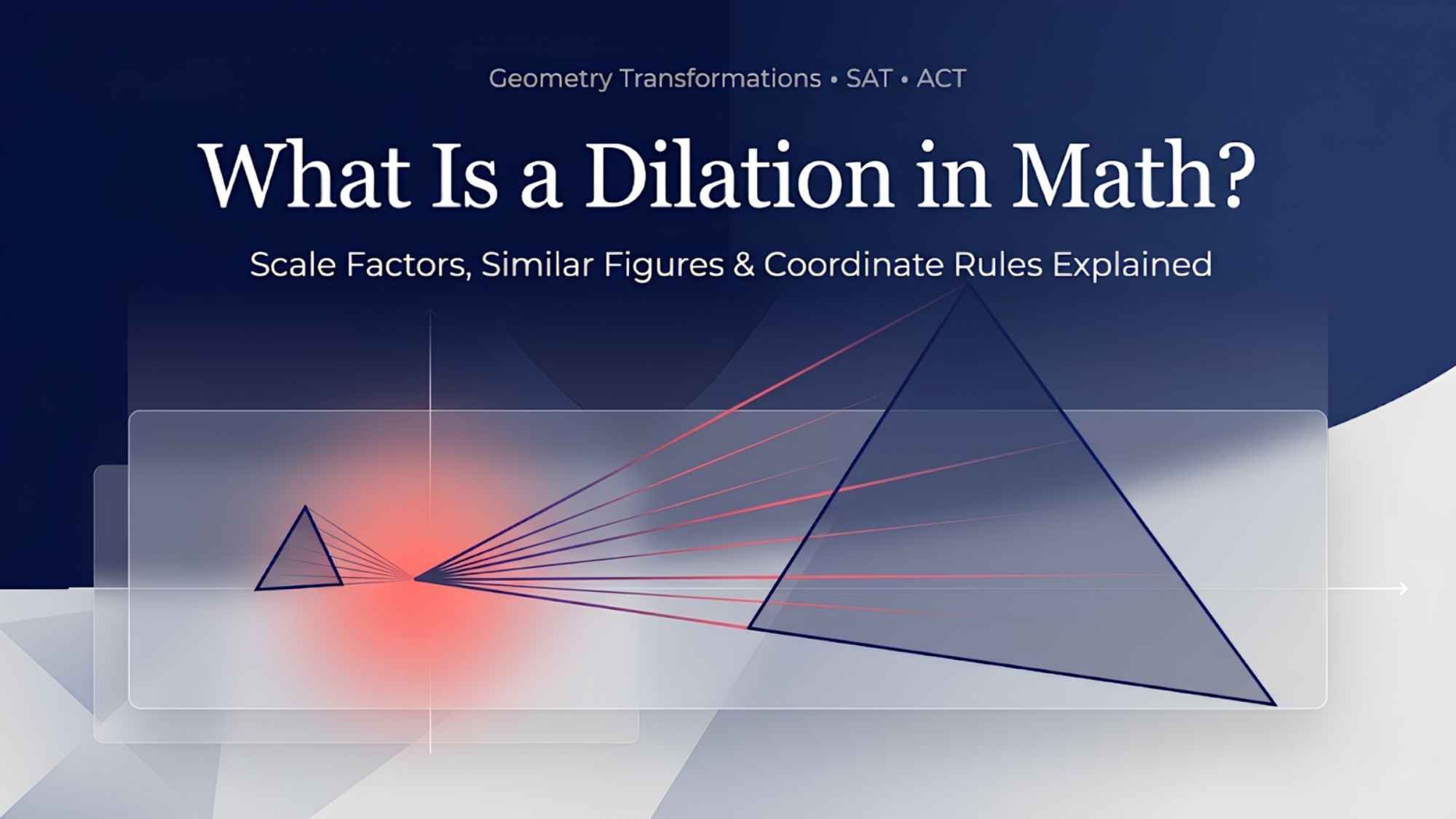
What Is a Dilation in Math?
A dilation in math is a transformation that resizes a figure — either enlarging or shrinking it — by a scale factor, from a fixed point called the center of dilation. The shape's proportions stay the same; only its size changes. Dilation is one of the four main geometric transformations, and it produces figures that are similar, not congruent, to the original.
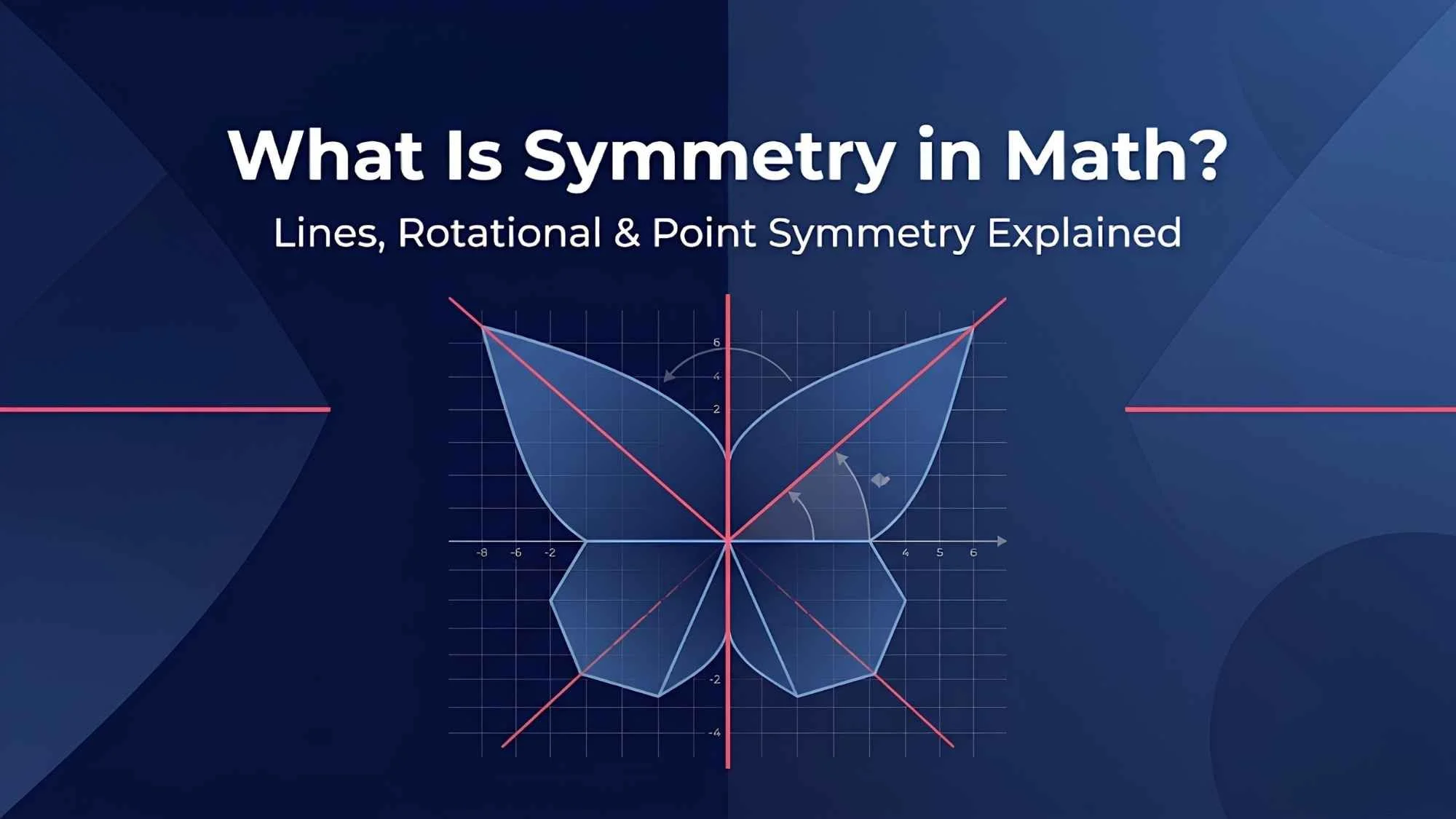
What Is Symmetry in Math? Lines, Rotational & Point Symmetry
Symmetry in math means a shape or figure looks identical on both sides of a dividing point, line, or axis after being folded, rotated, or reflected. A shape is symmetrical when one part is a mirror image of the other. The three main types of symmetry in math are line symmetry (reflective symmetry), rotational symmetry, and point symmetry.

What Is a Reflection in Math? (Transformations Series)
A reflection in math is a geometric transformation that flips a shape or point across a line called the line of reflection, producing a mirror image. The original figure and its reflection are congruent — same size and shape — but appear reversed. The line of reflection acts like a mirror. Common lines of reflection include the x-axis, y-axis, and the line y = x.

ACT Math Prep: Formulas and Concepts You Need to Know
ACT Math prep focuses on six content areas: Pre-Algebra, Elementary Algebra, Intermediate Algebra, Coordinate Geometry, Plane Geometry, and Trigonometry. The test is 60 questions in 60 minutes. Effective preparation means mastering core formulas — including the quadratic formula, slope, area, the Pythagorean theorem, and basic trig ratios — and practicing under timed conditions. No formulas are provided on test day, so memorization and application are essential.













How to Calculate the Area of a Rectangle: A Guide for High School Students
To calculate the area of a Rectangle multiply its length by its width.
Formula: Area = Length × Width (also written A = l × w)The result is always expressed in square units. If the sides are in centimeters, the area is in cm².Example: A rectangle with a length of 8 cm and a width of 5 cm has an area of 8 × 5 = 40 cm².